Overview:
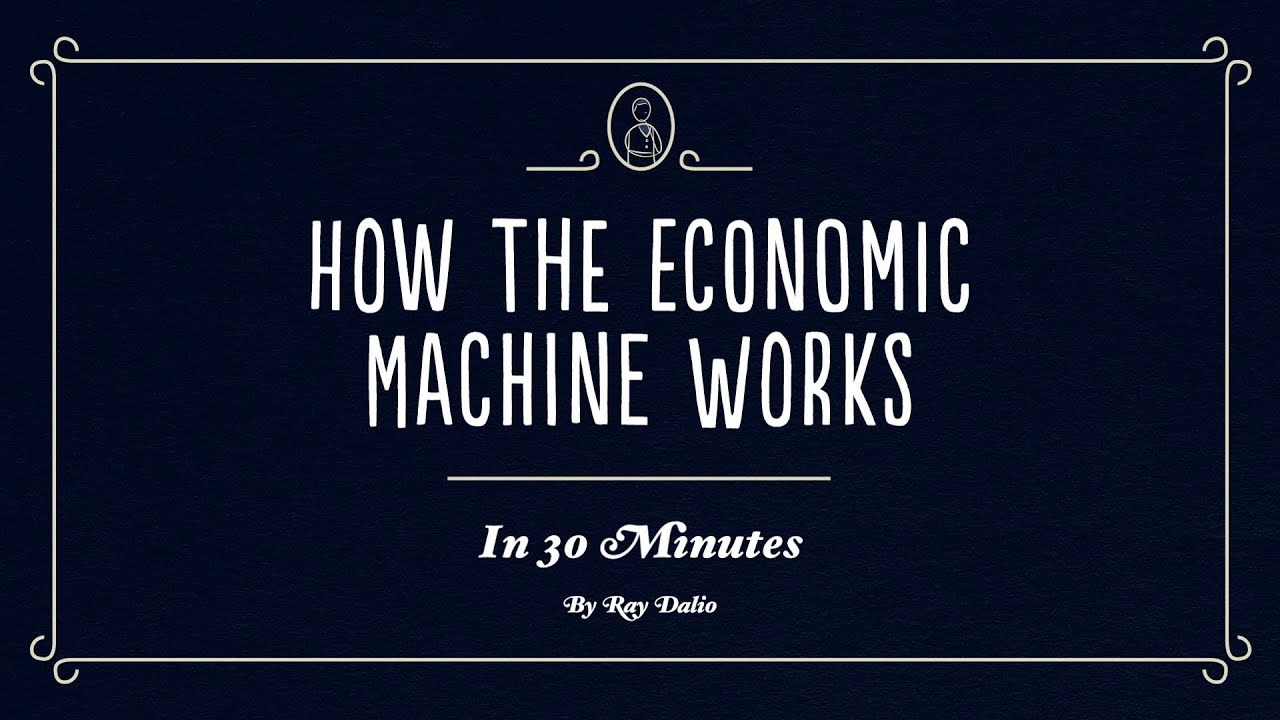
Ray Dalio, in his presentation “How The Economic Machine Works,” simplifies the intricacies of the economy into a comprehensible framework by focusing on transactions, credit, and debt cycles. Through a detailed analysis, he emphasizes the critical roles of productivity growth, short-term debt cycles, and long-term debt cycles in shaping economic movements and providing insights into the current economic landscape.
Key Insights:
- Transactions and Economy: Transactions form the foundation of the economy, where buyers and sellers engage in exchanges. These transactions, driven by credit and money, determine the total spending in the economy, ultimately influencing economic growth and cycles.
- Credit Dynamics: Credit plays a pivotal role in economic activities, enabling individuals to increase spending beyond their income levels. Understanding the dynamics of borrowing, lending, and debt is crucial as credit creation leads to economic growth but can also result in cycles of expansion and contraction.
- Debt Cycles: The economy experiences short-term debt cycles lasting 5-8 years and long-term debt cycles spanning 75-100 years. While short-term cycles are influenced by credit availability, leading to economic expansions and contractions, long-term cycles involve increasing debt burdens and eventual deleveraging processes, impacting economic stability and growth over extended periods.
- Deleveraging Process: During deleveraging phases, characterized by reduced spending, debt defaults, wealth redistribution, and monetary stimulus, policymakers aim to strike a balance to manage debt burdens effectively. Successful deleveraging, though challenging, can lead to a ‘beautiful deleveraging’ scenario where debt burdens decline, incomes rise, and economic growth resumes.
- Guiding Principles: Dalio emphasizes three fundamental rules: avoiding faster debt growth than income, ensuring income doesn’t outpace productivity, and prioritizing productivity growth for long-term economic sustainability. By adhering to these principles, individuals and policymakers can navigate economic challenges effectively.
Ray Dalio’s insightful breakdown of the economic machine provides a structured understanding of economic principles, debt dynamics, and the cyclical nature of economic fluctuations, offering valuable guidance for individuals and policymakers to navigate and comprehend the complexities of the economic system.